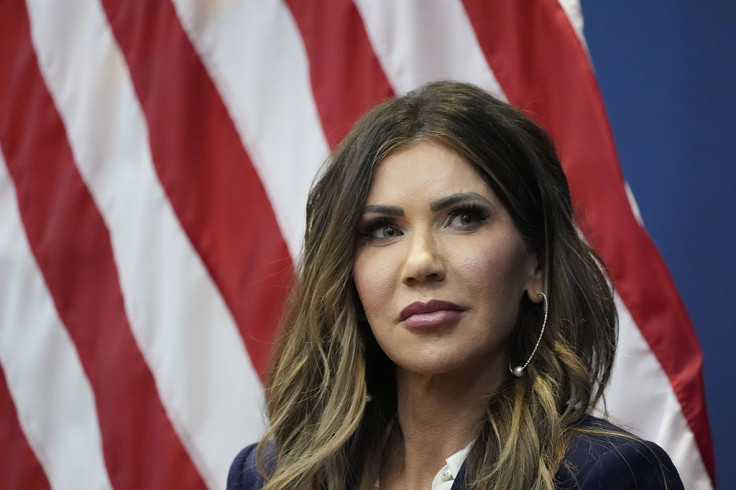
 U.S. Homeland Security Secretary Kristi Noem
Photo by Alex Brandon-Pool/Getty Images
U.S. Homeland Security Secretary Kristi Noem
Photo by Alex Brandon-Pool/Getty Images
The Department of Homeland Security misrepresented two Venezuelan immigrants as members of the Tren de Aragua gang after a U.S. Border Patrol agent shot them in Oregon in January, according to immigration and criminal justice experts, who said the government's public statements amounted to a "smear campaign."
The shooting occurred on Jan. 8 in a hospital parking lot in Portland, one day after a U.S. Immigration and Customs Enforcement officer fatally shot Renee Nicole Good, a 37-year-old U.S. citizen, in Minneapolis.
In press releases and social media posts issued the following day, DHS said Border Patrol agents had conducted a "targeted" stop of a vehicle occupied by gang members who had "weaponized" their car by attempting to run over officers, prompting an agent to fire.
Court records obtained by the Guardian, however, contradict that account. In them, a Justice Department prosecutor tells a federal judge, "We're not suggesting ... [Luis] Niño-Moncada is a gang member," referring to the driver who was shot in the arm.
An FBI affidavit also stated that the passenger, Yorlenys Zambrano-Contreras, whom DHS described as being "involved" in a prior Portland shooting, was instead a reported victim of sexual assault and robbery in that incident. Neither has prior criminal convictions, their lawyers said.
Niño-Moncada, 33, remains detained on a charge of aggravated assault of a federal officer. Zambrano-Contreras, 32, was not criminally charged but pleaded guilty to improper entry, a misdemeanor. Prosecutors have said the two were dating.
Related-
Trump Administration Eyes Commercial Warehouses To Detain Thousands Of Migrants In a Single Place

-
Congressional Democrats Seek New Limits For DHS: 'The Occupation of American Cities Must End'

"The federal government cannot be trusted. Our default position should be skepticism and understanding they lie very regularly," said Sameer Kanal, a Portland city councilor, to The Guardian. "There's a playbook of demonizing people ... and claiming vehicles were used as 'weapons.' We see a pattern of victim-blaming, and it's important we push back, because it's propaganda."
The Oregon case has drawn scrutiny in part because none of the six Border Patrol agents involved were wearing body cameras. The FBI said surveillance cameras did not capture the shooting, leaving investigators to rely largely on agents' testimony. Prosecutors later disclosed that partial surveillance footage had been obtained, though it does not clearly show the shooting.
The absence of video evidence has also been a central issue in Minneapolis, where the Trump administration faces criticism over its initial statements about the fatal shootings of Good and Alex Pretti, another U.S. citizen killed by federal officers weeks later. In response, DHS announced Monday that federal immigration agents in Minneapolis would begin wearing body cameras, with Secretary Kristi Noem saying the program would expand nationwide once funded.
Legal experts said the Oregon case illustrates broader concerns about credibility. "It just feels like a dirtying up of the defendant," said Carley Palmer, a former federal prosecutor, adding that without clear evidence of gang affiliation or video footage, "credibility is everything."
© 2025 Latin Times. All rights reserved. Do not reproduce without permission.
Tags: Department of Homeland Security, Dhs, Kristi Noem, Border patrol, Oregon, Minneapolis

