OCHOPEE, FLORIDA - JUNE 01: A bus pulls out from the front entrance of the immigration detention center in the Florida Everglades, known as “Alligator Alcatraz,” on June 01, 2026 in Ochopee, Florida. Reports indicate that the facility will be closed, possibly as early as this month. Florida Gov. Ron DeSantis has not officially confirmed that the closure is taking place.
Photo by Joe Raedle/Getty Images
OCHOPEE, FLORIDA - JUNE 01: A bus pulls out from the front entrance of the immigration detention center in the Florida Everglades, known as “Alligator Alcatraz,” on June 01, 2026 in Ochopee, Florida. Reports indicate that the facility will be closed, possibly as early as this month. Florida Gov. Ron DeSantis has not officially confirmed that the closure is taking place.
Photo by Joe Raedle/Getty Images
More than three weeks after Florida officials insisted the Everglades immigration jail nicknamed "Alligator Alcatraz" had shut down permanently, a federal judge says nobody has actually shown her proof of that.
U.S. District Judge Sheri Polster Chappell, sitting in the Middle District of Florida in Fort Myers, this week declined to pause the long-running lawsuit over conditions inside the facility. Her written order was blunt: outside of what lawyers had argued in briefs, she wrote that the court had seen no evidence from a state or federal official with authority to declare the facility permanently closed. She gave both governments four days either to hand over that proof or to explain when it might arrive, according to syndication of the Miami Herald's reporting.
Two Governments Say "Trust Us." The ACLU Says "Show Us."
State and federal attorneys had asked Chappell last week to freeze every remaining proceeding, arguing DeSantis's June announcement made the underlying suit moot. Their brief leaned on the governor's own comments that any future reopening would be minimal.
Attorneys with the ACLU's National Prison Project weren't satisfied, telling the court that officials had offered nothing beyond scattered, sometimes conflicting public statements — not documentation. Their position: if there's any real chance the site reopens, the case representing everyone who was held there, plus anyone who might be detained there later, has to stay alive. Deputy ACLU director Carmen Iguina Gonzalez put it plainly to the Herald, saying vague assurances don't "cut it" — the group intends to stay watchful until the facility's closure is beyond doubt.
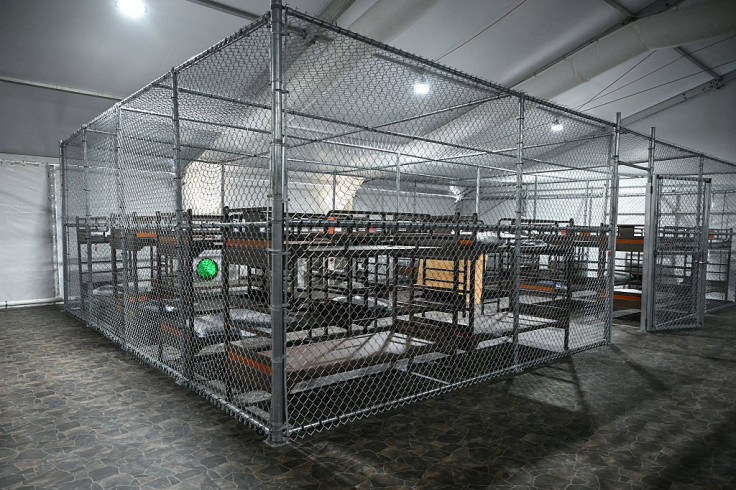 Beds are seen inside a migrant detention center, dubbed "Alligator Alcatraz," located at the site of the Dade-Collier Training and Transition Airport, as US President Donald Trump tours the facility in Ochopee, Florida on July 1, 2025.
Photo by ANDREW CABALLERO-REYNOLDS/AFP via Getty Images
Beds are seen inside a migrant detention center, dubbed "Alligator Alcatraz," located at the site of the Dade-Collier Training and Transition Airport, as US President Donald Trump tours the facility in Ochopee, Florida on July 1, 2025.
Photo by ANDREW CABALLERO-REYNOLDS/AFP via Getty Images
A Full Year of Courtroom Battles Over the Everglades
The airstrip-turned-detention-camp sits inside the Big Cypress National Preserve on state land, and it opened on July 1, 2025, after a burst of emergency, no-bid contracting. Lawsuits followed almost immediately — one over environmental damage, another over detainees' access to counsel.
By late August 2025, U.S. District Judge Kathleen Williams had sided with environmental groups, finding the rushed construction bypassed federal wetlands protections and ordering the site wound down within 60 days, citing the ecological fragility of the surrounding marsh, as Global News reported at the time. An appellate panel stayed that ruling within days, and the facility kept running.
The separate fight over legal access reached a milestone on March 27, 2026, when Chappell ordered officials to widen phone and visitation access for detainees and provisionally certified the case as a class action covering everyone held there — past, present, and future, according to a summary of the ruling from Davis Vanguard. Weeks later, after advocates said guards had retaliated against detainees who'd demanded phone access, Chappell used a sharper line during an April 13 hearing, telling officials to "stop sandbagging the court," according to Truthout's coverage of the hearing — though she stopped short of ordering officials to formally document their compliance.
 (L/R) Florida Governor Ron DeSantis looks on as White House 'border czar' Tom Homan speaks during a press conference at the South Florida Detention Facility, nicknamed "Alligator Alcatraz," at the Dade-Collier Training and Transition Airport in Ochopee, Florida, on June 25, 2026. DeSantis announced that the facility is now closed and all detainees have been relocated.
Photo by CHANDAN KHANNA / AFP via Getty Images
(L/R) Florida Governor Ron DeSantis looks on as White House 'border czar' Tom Homan speaks during a press conference at the South Florida Detention Facility, nicknamed "Alligator Alcatraz," at the Dade-Collier Training and Transition Airport in Ochopee, Florida, on June 25, 2026. DeSantis announced that the facility is now closed and all detainees have been relocated.
Photo by CHANDAN KHANNA / AFP via Getty Images
From Hurricane Precaution to a Declared Victory
By June 2026, with storm season approaching, officials began relocating detainees, initially describing the move as temporary. That framing changed on June 25, when DeSantis stood at the now-former detention site and declared it had zero detainees left, saying the facility had "fulfilled the role that it was designed to serve." He credited the site with processing roughly 21,000 people over its year of operation and predicted full teardown within two weeks.
Miami-Dade Mayor Daniella Levine Cava responded by formally notifying county commissioners of her intent to transfer the county-owned land to the National Park Service and other Everglades restoration partners, arguing the property's "highest and best long-term use" is conservation, according to Florida Politics' account of her memo.
The Money Trail Still Doesn't Add Up Cleanly
Florida built and ran the site under emergency rules that skipped competitive bidding, and the running total keeps moving depending on who's counting and when. Reporting compiled in early June put paid-out contract spending at roughly $335 million across 55 contracts tied to both the Everglades site and its sister facility, "Deportation Depot," out of commitments that could approach or exceed $1 billion combined, according to an AOL report reviewing state financial records. DeSantis has publicly disputed that the total reaches a full billion dollars, though he hasn't offered an alternative figure.
The Federal Emergency Management Agency approved a $608 million reimbursement — itself negotiated down from Florida's original $1.5 billion ask — but that money can also be spent on the second facility, not just the Everglades site, according to reporting from KFOX/TNND on the award. Only about $58 million of that has actually reached the state so far, and Florida's own attorneys have conceded in court filings that the balance may never arrive, per CBS12's review of state spending records.
What Comes Next
With Chappell's four-day clock now running, the case turns on whether officials can produce actual records — not podium statements — proving the facility won't reopen. If they can't, the provisionally certified class action continues, keeping court oversight in place even with the tents reportedly gone.
© 2025 Latin Times. All rights reserved. Do not reproduce without permission.
Tags: Alligator alcatraz