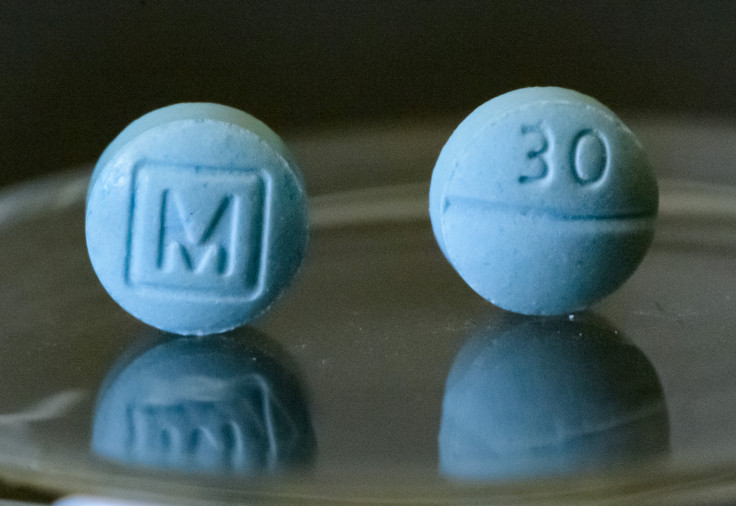
 Fentanyl pills
DEA official site
Fentanyl pills
DEA official site
The Justice Department's watchdog is investigating how widely Drug Enforcement Administration agents allowed fentanyl shipments to reach U.S. streets rather than seizing them, a controversial tactic intended to protect larger investigations and identify higher-level drug traffickers.
The review follows an Associated Press investigation that found DEA agents in New Mexico repeatedly knew about fentanyl shipments but did not intercept them, including one delivery involving 74,000 pills that agents monitored as it reached an Albuquerque mobile home park.
Justice Department Inspector General Don Berthiaume announced that his office will examine DEA wiretap investigations from the past two years to determine how frequently agents knew fentanyl deliveries were coming but allowed the drugs to remain in circulation.
The investigation significantly broadens scrutiny of a tactic sometimes described as letting drugs "walk." What began with questions about operations in New Mexico could now establish whether similar decisions were made elsewhere in the country.
The practice was intended to protect ongoing investigations, particularly wiretaps that could help agents move beyond lower-level dealers and identify suppliers and leaders of trafficking organizations. Controlled deliveries and other forms of surveillance are established law enforcement techniques that can allow investigators to follow drugs or other contraband to additional suspects.
After More Than 220 Deaths, DEA Analysis Says Trump's Drug Boat Strikes Failed to Curb Cocaine SupplyRead more After More Than 220 Deaths, DEA Analysis Says Trump's Drug Boat Strikes Failed to Curb Cocaine SupplyBut fentanyl presents an unusually high-stakes calculation because of the drug's potency and its role in tens of thousands of overdose deaths each year.
The AP investigation found that agents sometimes chose not to seize fentanyl even when they knew where shipments were headed. Current and former DEA personnel questioned whether those decisions were consistent with Justice Department requirements to protect public safety during investigations.
One of the most striking examples occurred in Albuquerque, where agents were aware of a shipment containing approximately 74,000 fentanyl pills but allowed the delivery to proceed, according to an internal DEA report obtained by AP.
DEA whistleblower David Howell, who raised concerns about the practice internally in 2023, offered a stark assessment of what happened. "We poisoned our community to make cases," Howell told AP. Howell's allegations and the agency's response to his whistleblower complaint are also expected to receive scrutiny.
Related-
CIA Deaths In Mexico Trigger Sheinbaum Crackdown On State-Level U.S. Security Ties

-
Fentanyl Crisis Expanding Across Puerto Rico, Costa Rica and Dominican Republic, According to International Reports

-
U.S. Raises Reward to $25 Million for CJNG Leader Juan Carlos Valencia, El Mencho's Stepson, Matching Historic Bounties for Maduro and Bin Laden

The inspector general's review comes after DEA Administrator Terry Cole requested an independent examination following publication of AP's findings. Cole said at the time that seeking outside review should not be interpreted as a lack of confidence in DEA employees.
The controversy has already moved beyond the federal government.
New Mexico Attorney General Raúl Torrez opened a criminal investigation in July into whether DEA agents violated state law by knowingly allowing fentanyl to reach communities. Gov. Michelle Lujan Grisham also called for an investigation, describing the reported conduct as "reckless and dangerous."
The location makes the allegations particularly consequential.
New Mexico recorded 775 drug overdose deaths in 2024, according to final Centers for Disease Control and Prevention figures, with an age-adjusted overdose death rate of 37.1 per 100,000 people.
The investigation also exposes an uncomfortable contrast between the DEA's public fentanyl warnings and some of the investigative decisions described by agents.
For years, the agency has used its "One Pill Can Kill" campaign to warn that counterfeit pills containing fentanyl can be lethal. The DEA has also made reducing the fentanyl supply a central enforcement priority, launching its "Fentanyl Free America" initiative and frequently publicizing major seizures as evidence of progress against trafficking organizations.
Yet AP's reporting indicates that agents sometimes made a different calculation behind the scenes, allowing known shipments to continue moving in hopes of developing more significant criminal cases.
The central issue for investigators will not simply be whether agents ever monitored fentanyl without immediately seizing it. Controlled operations are a longstanding part of narcotics enforcement.
Instead, the inspector general will examine how those decisions were authorized, whether agents followed Justice Department and DEA safeguards, and how officials weighed the potential intelligence gained from a continuing investigation against the danger of allowing fentanyl to remain outside law enforcement control.
© {{Year}} Latin Times. All rights reserved. Do not reproduce without permission.
Tags: DEA, Fentanyl, DOJ